This week (9th to 15th November) is Living Wage Week, and this year the Living Wage movement is celebrating 25 years of campaigning. It is a good moment to say clearly where Salford CVS stands, why we pay the real Living Wage, and why we believe it matters so much for the voluntary, community and social enterprise (VCSE) sector in Salford.
Salford CVS has been an accredited Living Wage Employer since 2013. In 2018 we also became an accredited Living Wage Funder, because the way we give out grants can help other organisations pay fairly too. Our position is simple: everyone who works for us, and everyone in the jobs we fund and advertise, should earn enough to live on.
That commitment shows up in our day-to-day work:
- We pay all our staff at least the real Living Wage.
- Since 2018 we have asked organisations applying to us for funding whether they pay the real Living Wage.
- Jobs advertised on our website and the GM Recruitment Hub must pay at least the real Living Wage.
- We work with partners across the city on Salford's ambition to be England's first Living Wage City.
Alison Page, Chief Executive of Salford CVS, said: "We have paid the real Living Wage since 2013 because we believe a hard day's work deserves a fair day's pay. Our sector exists to tackle poverty, so it matters that the people doing that work can afford to live in the communities they serve. We know budgets are tight, which is why we use our role as a funder to help make fair pay possible across Salford's VCSE sector."
So what exactly is the real Living Wage? It is the only UK wage rate based on what people actually need to live on, covering everyday costs such as rent, food, energy and transport. It is calculated independently for the Living Wage Foundation, and employers choose to pay it.
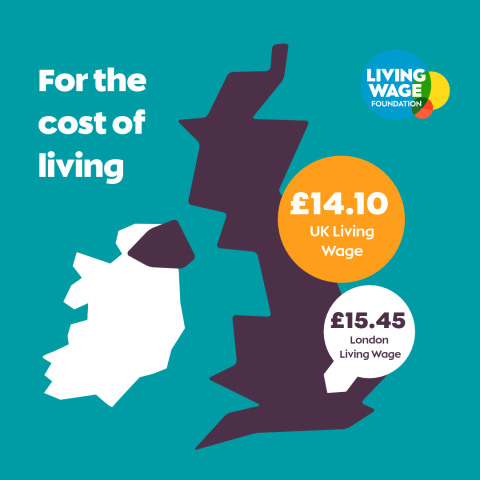
On 15th October 2026 the new rates were announced: £14.10 an hour across the UK and £15.45 in London. That is £1.39 an hour more than the government's legal minimum, the National Living Wage of £12.71 for workers aged 21 and over. The Living Wage Foundation says the new UK rate is worth over £2,700 more a year than the legal minimum for a full-time worker. Accredited employers have until 1st May 2027 to bring in the new rate.
We support the real Living Wage for three reasons. First, it is about our values. Many of the people our sector works alongside are living with the cost of living crisis every day. We cannot ask for fairness for our communities while paying our own staff less than they need to get by.
Second, it is good for organisations. Employers who pay the real Living Wage report better staff retention, easier recruitment and staff who feel valued. For a small charity, where losing one experienced worker can put a whole project at risk, keeping good people matters.
Third, it is good for Salford. Fair pay helps reduce in-work poverty and means fewer working people have to rely on in work benefits to make ends meet.
Our sector exists to tackle poverty and inequality, yet low pay can still be found within it. Roles such as care workers, charity shop staff and entry-level posts are among those most likely to be paid below the real Living Wage.
We know the pressures are real. Funding is often short term, contracts rarely keep pace with inflation, and many small groups run on very tight budgets. That is exactly why funders and commissioners have a part to play. When funding is set at a level that covers fair pay, organisations can pay their staff properly without cutting the services people rely on. As a Living Wage Funder, we try to build this into how we fund, and we encourage other funders and commissioners across Salford and Greater Manchester to do the same.
Paying the real Living Wage also strengthens our voice. When we speak up for the communities we serve, we can do so knowing we are practising what we preach.
What you can do this Living Wage Week
- Check your pay rates against the new £14.10 rate, including for part-time and sessional staff.
- Find out about becoming accredited through the Living Wage Foundation.
- If you fund or commission services, check whether your grants and contracts allow organisations to pay the real Living Wage.
Twenty-five years on, the Living Wage movement has shown that fair pay is possible. Salford's VCSE sector has helped lead the way, and we want to keep going together, so that a hard day's work always earns a fair day's pay.