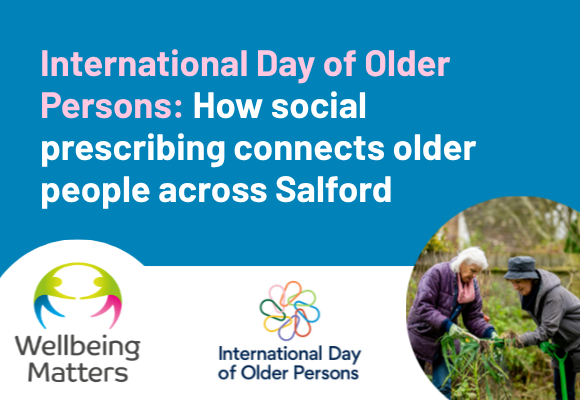
1st October 2026 marks the International Day of Older People, and in Salford we’re celebrating everything that makes us an Age Friendly City. This year’s theme is “On Your Doorstep”, highlighting the importance of local connections, community support, and the services and opportunities available to older people close to home.
At Salford CVS, we’re proud to champion this theme through our Wellbeing Matters programme, delivered in partnership with The Big Life Group, START Inspiring Minds, Social adVentures, Inspiring Communities Together, and Langworthy Cornerstone, each bringing deep local knowledge and trusted relationships.
So, what is Wellbeing Matters? The Wellbeing Matters partnership is a social prescribing approach that links statutory health and care services to Salford’s rich and diverse voluntary, community and social enterprise (VCSE) sector. Older people are regularly referred into the programme for a range of non-medical needs, including social isolation, physical activity needs or low-level mental health issues. This could be via their by their GP practice, hospital team, mental health team or social worker. Since April 2026, approximately 1 in 4 of our referrals have been residents aged 65 and over – that’s more than 600 Salford residents.
At the centre of this initiative is the Community Connector model with Connectors working across all areas of Salford, in the five health and care neighbourhoods. This neighbourhood‑based approach ensures that support is local, accessible, and tailored to the unique needs of each community. Connectors offer compassionate, person-centred support, raising residents’ awareness of local opportunities and activities, making Salford more accessible and welcoming. Residents consistently report better self-management of long‑term conditions, improved mental wellbeing and increased physical activity levels. Connectors personalise their approach to each resident, offering face-to-face and telephone appointments, ensuring the programme is accessible for all depending on their needs. Connectors also regularly attend groups and activities alongside residents, which has helped to break down barriers to participation. This has built trust, confidence, and a sense of friendly support, encouraging individuals to try new activities and sustain engagement over time. Alongside our Community Connectors, Wellbeing Matters employs several Development Workers who support community groups and organisations to deliver high-quality community offers, ensuring they’re safe, sustainable, and inclusive.
Connectors regularly refer into Age Friendly Salford (AFS), Age UK Salford, local befriending offers and the Active Lifestyles Team. Inspiring Communities Together also has a dedicated Age Friendly Salford Padlet, helping Salford residents find out what upcoming events and activities are available in their area. We’ve also recently hired a dedicated Older Adults Connector, based with the Adult Social Care team, who will work city wide helping to support our older residents.
As we mark the International Day of Older People, Wellbeing Matters shows what "On Your Doorstep" means in practice. Across Salford's neighbourhoods, older residents are finding friendship, activity and support close to home, helped along the way by Connectors who know their communities well. None of this would be possible without our partners and the many VCSE groups whose work makes Salford a great place to grow older. If you, or an older person you know, could benefit from some extra support or a new connection, speak to your GP about a referral to Wellbeing Matters. The next opportunity to connect might be just around the corner.
For more information visit Wellbeing Matters | Salford CVS, or contact the Wellbeing Matters Programme Manager on Nicola.Spiby-Roberts@salfordcvs.co.uk.
Useful links for more information on Social Prescribing:
- Wellbeing Matters Social Prescribing - how it works in Salford
- NHS England Social prescribing
- Social prescribing - Transformation Partners in Health and Care
- What is social prescribing film
- What is the evidence for Social Prescribing?